CHOOSE
Pick two animals and how many of each enter the fight.
Pick any two animals. The math decides who wins. The AI tells the story.
The internet was arguing about a gorilla and a man. I made the reasonable decision to build a combat simulator for sixteen animals. Could fixed rules settle a matchup, then let AI turn that particular fight into a film?
TRY THE LIVE GAME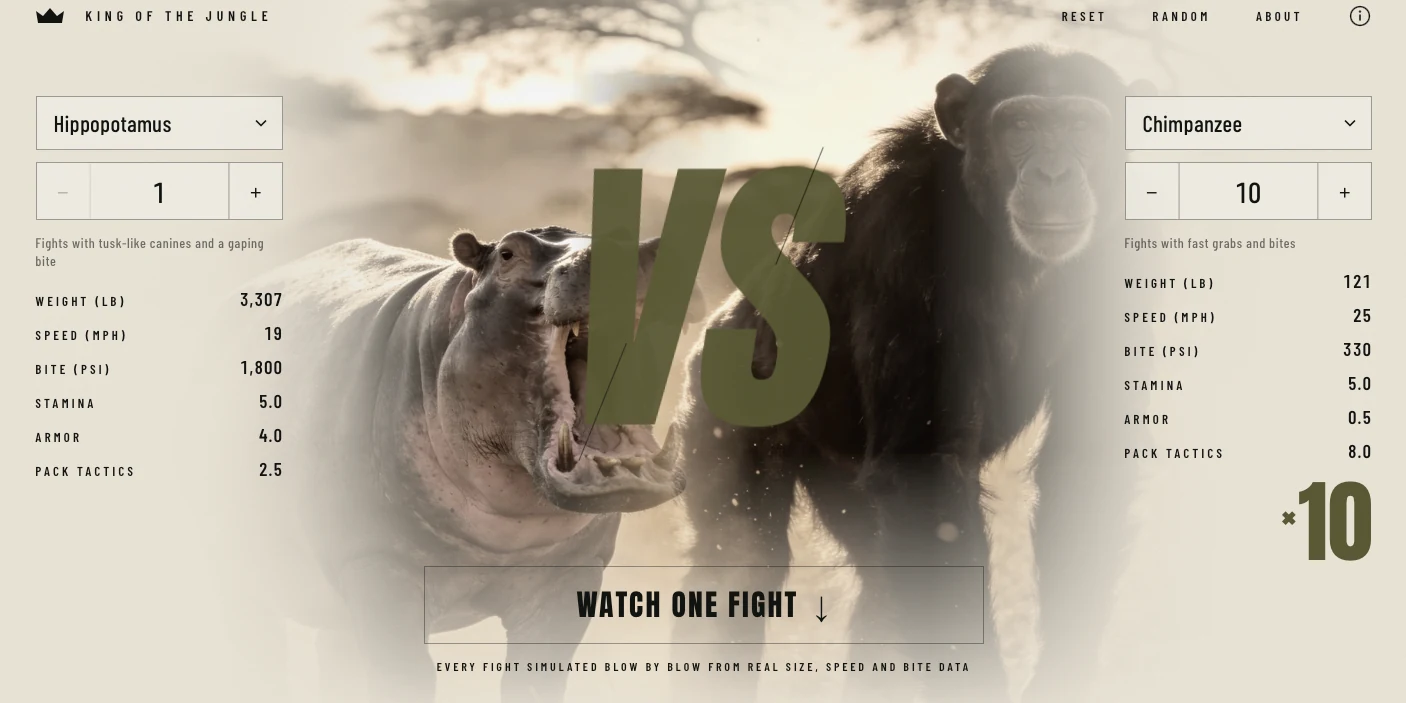
Ask a chatbot whether a grizzly beats a lion and it may answer with the confidence of a wildlife biologist who has seen the tape. Ask again and you might get another winner. I wanted the rules to make the call before the storyteller arrived.
King of the Jungle fixes the animals’ attributes and the rules of combat first. A simulation settles the odds and plays out one fight. The AI receives that result as a constraint; its job is to make the specific outcome worth watching.
The engine uses body mass, speed, bite force, armor, stamina, and group tactics. Health scales with mass; smaller animals do limited damage to giants; only so many attackers can reach one target; and stamina drains with strikes. Honey badgers never retreat. These are the game’s explicit rules, not decisions improvised by the narrator.
Pick two animals and how many of each enter the fight.
Run 1,000 fights for the odds, then play one encounter blow by blow. Upsets remain possible.
Turn that exact play-by-play into narration, imagery, voice, and a vertical reel.
Hippo versus 33 chimpanzees: choose the matchup, see the odds, then watch one fight drawn from them. Turn on sound for the narration.
I checked the model against familiar matchups: tiger and lion land close to even; a grizzly beats a lion around 75% of the time; 30 chimpanzees can take down a gorilla; and ten wolves beat a grizzly about four times in five.
These are outcomes within the game’s simulation rules.A fixed engine supplies the odds and the play-by-play of the selected fight.
Claude writes nature-documentary narration from that exact sequence. It cannot change the winner.
Seedream paints the battle art; ElevenLabs records the narrator.
The server edits a 25–40 second vertical video with a tale of the tape, fight clock, and subtitles. It stays PG: no blood or wounds.
~20¢ for a matchup’s first reel
~3¢ thereafter with art cached per matchup
~$1.20 for the optional cinematic version, available only to me
The first live battle wrote its narration and painted its art, then failed at the voice step. The voice ID was two characters off. My status page had called it ready because a key existed; the visitor saw a raw error and lost one of five daily battles.
Now a free lookup confirms the voice exists before a battle spends anything. Failures show a plain message, return the visitor’s credit, and send the full error to my logs. Retry resumes at the failed step, keeping narration, art, and recorded lines.
The animal portraits also failed on day one. I had requested image sizes below the model’s minimum. The picker now displays each animal’s emoji until its portrait exists, instead of leaving a blank box.
Both failures made the same point: an end-to-end experience needs a useful path through partial failure, not merely a successful happy path.
The same matchup runs from the same rules and odds, but each simulated fight can unfold differently. The engine decides that particular result; AI performs the story without inventing the ending.
Shared fight art turns repeat matchups from roughly 20 cents into roughly 3 cents.
A configured key did not mean the voice worked. Readiness checks, refunds, and resumable retries made the experience reliable enough to share.
I came for an absurd matchup. I stayed for the question every production system has to answer: which parts can improvise, and which parts absolutely cannot?